
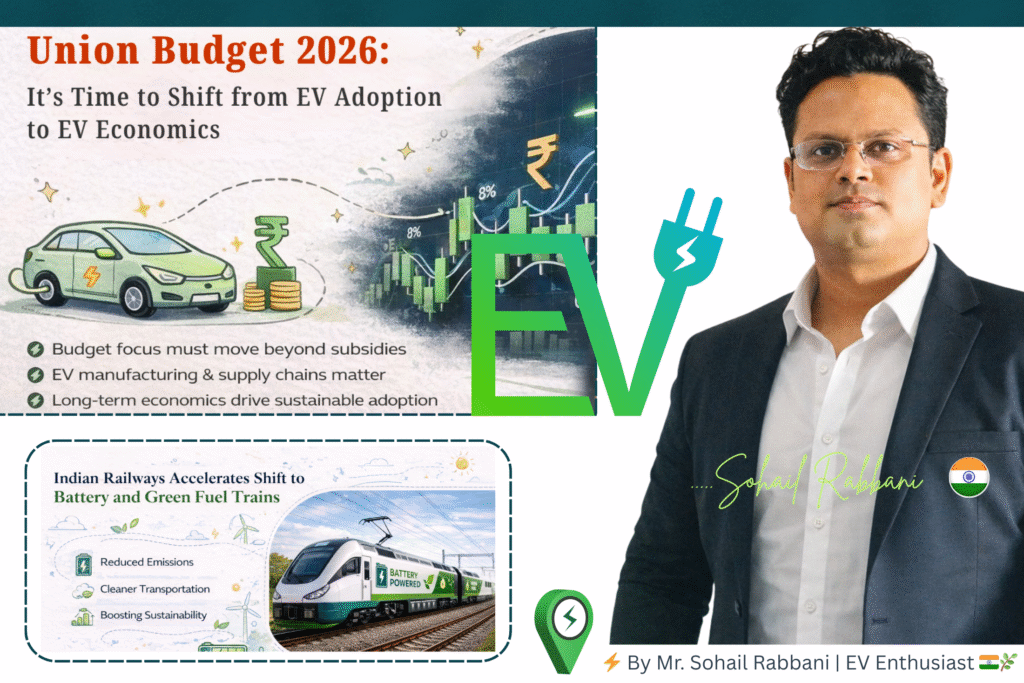
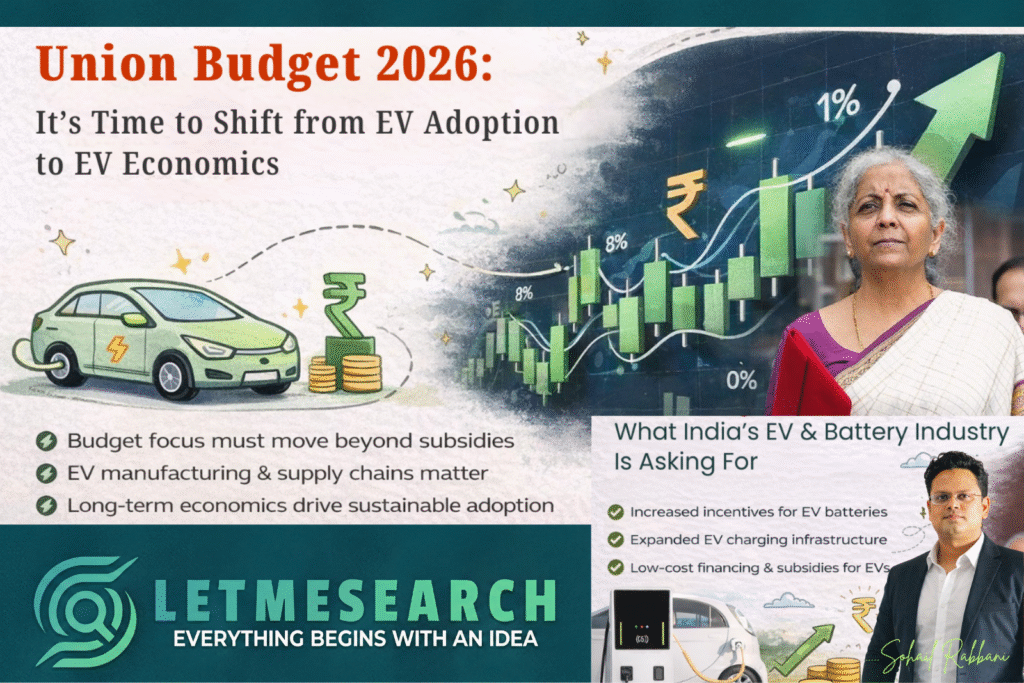
Electric Vehicles (EVs) in India are no longer just a vision of the future — they are becoming part of our everyday reality 🚗🔋
But now an important question arises:
👉 Is increasing EV sales enough?
👉 Or is it time to focus on making EVs economically strong, affordable, and sustainable?
This is exactly where Union Budget 2026 becomes crucial.
🔙 What Has Been Done So Far?
Over the past few years, the government has taken several steps to promote EV adoption:
✅ Subsidy schemes like FAME and PM E-DRIVE
✅ Lower taxes on EVs
✅ Incentives to encourage people to switch to electric vehicles
As a result:
📈 EV sales increased
📈 Public awareness and trust grew
However, one thing is now clear 👇
Subsidies alone cannot support the EV industry in the long run.
🔄 The Shift in Thinking
The focus now needs to change:
❌ From “Buy EVs”
✅ To “Make EVs affordable and economically viable”
In other words, the discussion is moving from EV Adoption to EV Economics 💰⚙️
🏭 1️⃣ Boost Domestic Manufacturing
India’s EV future will be strong only if key components such as:
🔹 Batteries
🔹 Motors
🔹 EV parts
are manufactured within the country 🇮🇳
This will:
✔ Reduce import dependence
✔ Lower production costs
✔ Create jobs
✔ Position India as a global EV manufacturing hub 🌍
💸 2️⃣ Fix Tax and GST Challenges
One major issue faced by the industry is the inverted GST structure:
😕 EVs have lower GST
😕 But EV components are taxed higher
This increases manufacturing costs.
With Budget 2026, the industry hopes for:
✔ Balanced GST rates
✔ Faster and simpler tax refunds
✔ A more investor-friendly environment 🤝
🔋 3️⃣ Strengthen Battery and Charging Infrastructure
Two major concerns for EV users are:
🔌 Charging availability
🔋 Battery costs
If the budget focuses on:
✔ Affordable battery manufacturing
✔ Battery recycling
✔ Wider charging infrastructure
EVs will become more practical and accessible for everyone 😊
📜 4️⃣ Policy Stability and Clarity
Investors hesitate when policies:
⚠ Change frequently
⚠ Lack long-term clarity
The EV sector needs:
✔ Clear long-term policies
✔ Stable regulations
✔ Consistent government support
This confidence can attract large-scale investments 💼📈
🎯 The Real Objective of Budget 2026
The goal is no longer just:
❌ Counting how many EVs are sold
Instead, the focus is on:
✅ Making EV production affordable
✅ Building a sustainable EV ecosystem
✅ Strengthening India’s EV economy
EVs should not just be a trend — they should be a well-supported system ⚙️🌱
🏁 Conclusion
Union Budget 2026 signals a major shift in India’s EV strategy:
🔁 From subsidies → to sustainability
🔁 From sales → to strong manufacturing
🔁 From short-term schemes → to long-term vision
If implemented wisely, this shift can help India become a global leader in the EV space 🇮🇳🚀